
Le miel quotidien de la maison
On en consomme un pot toutes les 3 semaines avec les enfants. Doux, polyvalent, parfait sur le pain au petit-déjeuner ou dans le thé. C'est devenu notre miel de table par défaut, je remplace dès qu'il finit.


Polyfloral
عسل الزهور
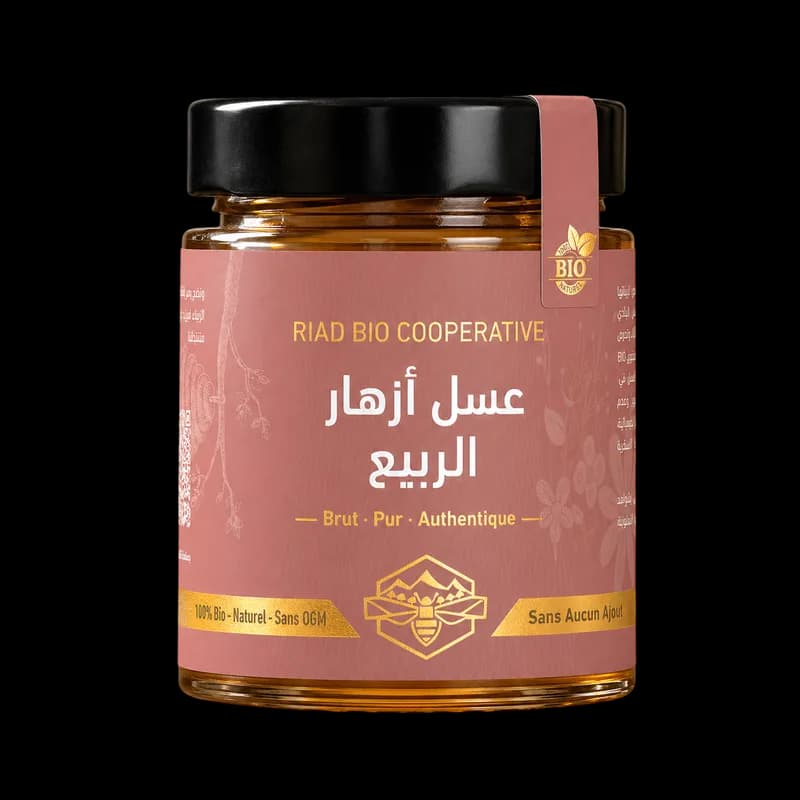
Wildflower honey isn't a "default" honey: it is the most authentic expression of a seasonal terroir. Over several weeks, the bees work every plant in bloom within a few kilometers of the hive. Clovers, rosemary, lavenders, wild fennel, meadow aromatics — each flower contributes to a natural assortment impossible to reproduce artificially. It's the liquid signature of a Moroccan spring. Our wildflower honey is harvested in the meadows and floristic zones of the Souss-Massa and the Middle Atlas, on diverse sites chosen by the beekeepers for their biodiversity. No additions, no after-the-fact blending: what comes out of the hive goes into the jar. Harvest is by hand, the honey is cold-decanted, and every jar lists the zone and the production season. The cooperative keeps an up-to-date site register to ensure real traceability, jar by jar. On the palate, a round and accessible profile, more floral than woody, with a clean sweetness and a faintly herbaceous finish. Less typed than a monofloral, but with remarkable versatility: on plain yogurt, as a pastry glaze, in an evening infusion, in a balsamic dressing. The everyday honey of traditional Moroccan cooking — the one that accompanies morning mint tea without ceremony. For baking, its floral sweetness perfumes without dominating — ideal in chebakias, ghribas and briouates au miel. Add at the end of cooking or as a cold glaze to preserve its aroma. At the table it also pairs well with fromage blanc, homemade yogurts and muesli. Like all our raw honeys, it may crystallize over time — an authenticity marker. A warm water bath returns it to a liquid texture without affecting its qualities.
100 MAD
Stock: 12
From the meadows and floristic zones of the Souss-Massa and the Middle Atlas, where in spring the bees work an assortment of wild flowers — clovers, rosemary, lavender, fennel, aromatic plants. That polyflorality is its signature: a balanced table honey that voices the diversity of a seasonal terroir.
A round, accessible profile, more floral than woody, with a clean sweetness and a faintly herbaceous finish. Less typed than a monofloral honey, but it offers a remarkable versatility: as comfortable on plain yogurt as on a pastry glaze or in an evening infusion. The everyday honey of traditional Moroccan cooking.
On fresh bread, in mint tea, on fresh fruit, or to soften a balsamic dressing. It also goes very well with fromage blanc, homemade yogurts and muesli. An everyday honey, without ceremony, that naturally finds its place at the Moroccan breakfast table.
Absolutely. Its floral sweetness perfumes without dominating — ideal in chebakias, ghribas, briouates au miel or homemade chouquettes. To preserve its aroma, add at the end of cooking or as a cold glaze rather than boiling it. It's also a fine substitute for sugar in homemade yogurts and ice creams.
Monofloral honey comes from a single dominant species (Sidr, thyme, orange blossom…) — a typed, sometimes medicinal honey. Wildflower (multifloral) honey is the product of diversified foraging: rounder, more accessible, more versatile. Neither better nor worse, just two different uses: monofloral for specificity, multifloral for the table.
On the contrary. Every raw honey crystallizes sooner or later — it's actually an excellent authenticity signal. Industrially heated honey stays fluid artificially. To restore a liquid texture, a warm water bath (never above 40 °C) is enough. No impact on taste or properties.
4,8
5 avis
Le miel quotidien de la maison
On en consomme un pot toutes les 3 semaines avec les enfants. Doux, polyvalent, parfait sur le pain au petit-déjeuner ou dans le thé. C'est devenu notre miel de table par défaut, je remplace dès qu'il finit.
Excellent rapport qualité-prix
Pour le prix, on a un miel cru, traçable, sans BS. Goût frais, pas trop sucré, légère cristallisation après quelques semaines. Idéal pour les pâtisseries marocaines et les yaourts maison.
Très bien pour les enfants
Mon fils de 4 ans déteste les goûts trop forts. Ce miel passe sans problème, il en met sur son pain tous les matins. Au moins je sais ce qu'il mange — pas de sucre ajouté, pas de cochonneries.
Bon mais cherche plus typé
Très correct comme miel de table, ne se distingue pas particulièrement. Pour quelqu'un qui veut un goût marqué, mieux vaut le thym ou le sidr. Mais pour la famille, parfait.
Bringing some back to the UK
Spent two weeks in Marrakech and brought back four jars. Family loves it on toast, the kids prefer it to honey from the supermarket. Will order online when this runs out.